
The criminal justice system in India is built on the principles of justice, equality, and the rule of law. One of the most critical aspects of this system is the investigation process, which forms the foundation of every criminal case. If the investigation is flawed or biased, the entire judicial process may lead to injustice. Therefore, the idea of a fair investigation becomes essential in ensuring that justice is delivered in its true sense.
The Code of Criminal Procedure (CrPC) governs the procedural aspects of criminal law in India and lays down the framework within which investigations must be conducted. While the statute primarily focuses on procedure, the courts have interpreted its provisions in a way that promotes transparency, accountability, and impartiality. A fair investigation ensures that both the accused and the victim are treated with dignity and that the truth is discovered without prejudice or external influence.
Meaning of Fair Investigation
The term fair investigation refers to an unbiased, transparent, and lawful inquiry conducted by investigating authorities to uncover the truth behind an alleged offence. It is not limited to collecting evidence but extends to ensuring that the entire process is conducted without favoritism, coercion, or manipulation.
A fair investigation requires that the investigating agency does not approach the case with a predetermined mindset. Instead, it must examine all aspects objectively and gather both incriminating and exculpatory evidence. The purpose is not to secure conviction at any cost but to ensure that justice is served.
Legal Framework under CrPC
The Code of Criminal Procedure provides a structured mechanism for investigation. Though it does not explicitly define the concept, several provisions indirectly ensure that the process remains just and unbiased.
Important sections include:
- Section 154 – Registration of FIR
- Section 156 – Power to investigate
- Section 157 – Procedure for investigation
- Section 161 – Examination of witnesses
- Section 165 – Search and seizure
- Section 173 – Filing of final report
These provisions collectively aim to maintain procedural integrity and support the idea of a fair investigation. They ensure that investigating officers follow a lawful process and do not act arbitrarily.
Constitutional Perspective
The concept is closely linked to fundamental rights, particularly Article 21 of the Indian Constitution, which guarantees protection of life and personal liberty. The judiciary has expanded the scope of this Article to include the right to a just and unbiased investigation.
The Supreme Court of India has repeatedly held that a proper and impartial inquiry is a necessary component of a fair trial. Any violation in the process can amount to a breach of constitutional rights. Thus, a fair investigation is not merely a procedural requirement but a constitutional mandate.
Objectives of a Proper Investigation Process
The goals of a legally sound and unbiased investigation include:
- Discovery of Truth
The primary aim is to find out what actually happened. - Protection of Rights
It ensures that no individual is wrongfully accused or harassed. - Prevention of Abuse of Power
Authorities must act within legal limits. - Ensuring Justice
A reliable investigation leads to a just outcome in court. - Maintaining Public Confidence
Transparency in the process builds trust in the system.

Key Elements of Fair Investigation
A fair investigation is characterized by certain essential elements:
1. Impartiality
The investigating authority must remain neutral and avoid any bias or prejudice.
2. Transparency
All steps in the investigation must be properly documented and open to scrutiny.
3. Legality
Every action must comply with the provisions of the law.
4. Objectivity
Decisions should be based on evidence rather than assumptions.
5. Accountability
Officers must be responsible for their conduct during the investigation.
Role of Police and Investigating Agencies
The police are the primary authority responsible for conducting investigations. Their role is crucial in ensuring that justice is not compromised. They must:
- Register complaints promptly
- Collect evidence in a lawful manner
- Avoid coercion or intimidation
- Maintain proper records
A fair investigation depends heavily on the integrity and professionalism of investigating officers. Any misconduct can weaken the case and affect the outcome of the trial.
Rights of the Accused
The accused person is entitled to certain protections during the investigation process:
- Right to legal representation
- Protection against self-incrimination
- Right against unlawful detention
- Right to be informed of charges
These rights are essential to ensure that the process remains just and balanced.
Rights of Victims
Victims also have an important place in the investigation process. Their rights include:
- Right to file a complaint
- Right to participate in proceedings
- Right to protection
- Right to timely justice
A balanced approach ensures that both sides are treated fairly.
Judicial Approach
The judiciary plays a vital role in ensuring that investigations are conducted properly. Courts have consistently emphasized that any deviation from legal norms can result in injustice. The Supreme Court of India has the authority to order reinvestigation or transfer cases to independent agencies if the process is found to be biased.
Judicial intervention acts as a safeguard against misuse of power and ensures adherence to the principle of fair investigation.
Consequences of Unfair Practices
If the investigation process is not conducted properly, it can lead to:
- Wrongful conviction of innocent persons
- Acquittal of guilty individuals
- Violation of fundamental rights
- Loss of faith in the legal system
Such outcomes highlight the importance of maintaining fairness at every stage.
Challenges in Practice
Despite strong legal provisions, several challenges affect the quality of investigations:
- Political or external pressure
- Corruption within agencies
- Lack of training and resources
- Delay in legal proceedings
These issues can hinder the effectiveness of a fair investigation and need to be addressed through reforms.
Safeguards and Remedies
To ensure accountability, the legal system provides several remedies:
- Judicial review of investigations
- Transfer of cases to independent agencies
- Departmental action against erring officers
- Right to approach higher courts
These safeguards help maintain the integrity of the process.
Role of Technology
Modern technology has significantly improved the quality of investigations. Tools such as:
- Forensic analysis
- Digital evidence collection
- Surveillance systems
- Cyber investigation methods
help in making the process more accurate and reliable. The use of technology reduces human error and enhances transparency.
Importance in Criminal Justice System
A fair investigation is essential because it:
- Forms the basis of a fair trial
- Ensures justice for both accused and victims
- Prevents misuse of authority
- Strengthens the rule of law
Without fairness in investigation, the entire justice system becomes unreliable.
Principles Governing Fair Investigation
A proper investigation is guided by certain fundamental principles that ensure justice is upheld at every stage. These principles act as a benchmark for evaluating whether the process has been conducted lawfully.
- Rule of Law – Every action must be based on legal authority and not arbitrary power
- Natural Justice – Both sides must be heard without bias
- Equality Before Law – No discrimination in the investigation process
- Accountability – Officers must justify their actions
- Transparency – Procedures must be clear and open to scrutiny
Stages of Investigation under CrPC
Understanding the stages of investigation helps in analyzing whether the process remains unbiased and lawful throughout.
1. Registration of FIR
The first step involves filing a First Information Report. It sets the criminal law into motion and must be recorded without delay.
2. Collection of Evidence
Investigating officers gather physical evidence, documents, and statements. This stage is crucial in maintaining a fair investigation as selective evidence collection can distort justice.
3. Examination of Witnesses
Witnesses are examined under legal provisions. Their statements must be recorded accurately and without coercion.
4. Search and Seizure
Authorities may conduct searches to collect evidence. These must follow legal procedures to avoid violations.
5. Filing of Charge Sheet
After completing the inquiry, a report is submitted to the court. This marks the transition from investigation to trial.
Each stage must be conducted carefully to ensure that the overall process remains just and unbiased.
Duties of Investigating Officers
Investigating officers play a critical role in ensuring justice. Their duties include:
- Acting without prejudice or personal interest
- Recording statements honestly
- Preserving evidence properly
- Avoiding illegal methods such as torture or coercion
- Following all procedural requirements
Failure to perform these duties can affect the credibility of the entire case.
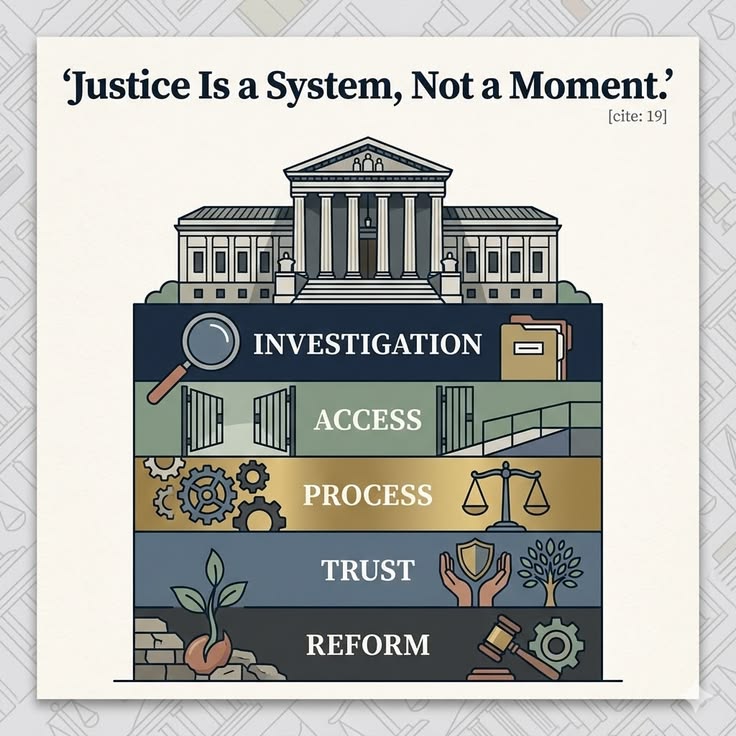
Importance of Evidence in Investigation
Evidence forms the backbone of any criminal case. A fair investigation requires that:
- Evidence is collected lawfully
- No evidence is fabricated or suppressed
- Chain of custody is maintained
- Forensic methods are used where necessary
Proper handling of evidence ensures that the truth is established beyond doubt.
Role of Independent Agencies
In certain cases, courts may transfer investigations to independent agencies to ensure neutrality. This step is taken when there is a possibility of bias or influence in the original investigation.
Such agencies are expected to:
- Conduct inquiries independently
- Maintain professionalism
- Follow strict legal standards
This mechanism acts as an important safeguard for maintaining fairness.
Impact on Trial Process
The quality of investigation directly affects the trial. A weak or biased investigation can lead to:
- Acquittal due to lack of evidence
- Delay in proceedings
- Misinterpretation of facts
On the other hand, a strong and balanced investigation supports the court in delivering a just verdict.
International Perspective
The concept of unbiased investigation is not limited to India. Globally, legal systems emphasize similar principles:
- Right to due process
- Protection against arbitrary arrest
- Independent investigation mechanisms
These universal standards highlight the importance of fairness in criminal proceedings worldwide.
Need for Reforms
To strengthen the investigation process, certain reforms are necessary:
- Better training for police officers
- Use of advanced forensic technology
- Strict action against misconduct
- Reducing political interference
- Improving infrastructure and resources
Reforms can help bridge gaps and enhance the effectiveness of the system.
Case Laws Emphasizing Fairness
Indian courts have consistently stressed the importance of unbiased investigations. The Supreme Court of India has observed that:
- Investigation must be free from bias
- Truth must be the ultimate objective
- Any unfair practice can vitiate the trial
Such judicial observations reinforce the need for maintaining integrity in investigations.
Ethical Standards in Investigation
Ethics play a crucial role in maintaining trust in the system. Investigating officers must adhere to:
- Honesty in handling cases
- Respect for human rights
- Professional conduct
- Responsibility towards society
Ethical practices ensure that justice is not compromised at any level.
Balancing Rights and Duties
A proper investigation must strike a balance between:
- Rights of the accused
- Interests of the victim
- Duties of law enforcement
Maintaining this balance is essential for achieving justice and preventing misuse of authority.
Role of Judiciary in Monitoring Fair Investigation
The judiciary plays a vital role in ensuring that investigations are conducted in a lawful and unbiased manner. Courts act as guardians of justice and intervene whenever there is a possibility of injustice due to a flawed or biased process. A fair investigation is not just the responsibility of the police but is also closely monitored by the courts to ensure adherence to legal standards.
The Supreme Court of India and High Courts have the authority to order reinvestigation, fresh investigation, or transfer of cases to independent agencies when the original investigation appears compromised. Judicial oversight ensures that investigating authorities do not misuse their powers or act under external pressure.
This supervision strengthens the principle of fair investigation by maintaining accountability and ensuring that justice is not denied due to procedural lapses or bias.
Importance of Documentation in Fair Investigation
Documentation is a crucial aspect of any investigation. Proper records such as FIRs, witness statements, case diaries, and evidence logs form the backbone of a fair investigation. These documents serve as a permanent record of the investigative process and help courts evaluate the credibility of the case.
Accurate documentation ensures transparency and prevents manipulation or fabrication of facts. It also helps in maintaining consistency in the investigation and provides clarity during the trial. Any gaps or inconsistencies in documentation can weaken the case and raise doubts about the integrity of the investigation.
Thus, maintaining proper records is essential for ensuring fairness, accountability, and reliability in the justice system.
Impact of Media on Fair Investigation
In the modern era, media plays a significant role in shaping public opinion. While media coverage can help bring attention to important cases, it can also negatively impact a fair investigation if not handled responsibly.
Media trials often create pressure on investigating agencies, leading to rushed conclusions or biased actions. Public speculation and sensational reporting may influence witnesses and even affect the impartiality of investigators.
Therefore, it is important to strike a balance between the public’s right to information and the need to maintain the integrity of a fair investigation. Responsible journalism is essential to ensure that justice is not compromised.
Role of Forensic Science in Fair Investigation
Forensic science has become an indispensable tool in modern investigations. Techniques such as DNA analysis, fingerprint identification, and ballistic examination help in establishing facts with a high degree of accuracy.
The use of scientific methods reduces reliance on eyewitness testimony, which can sometimes be unreliable. It also minimizes the chances of wrongful conviction by providing objective evidence.
A fair investigation is greatly strengthened by forensic tools, as they enhance credibility and ensure that conclusions are based on scientific facts rather than assumptions.
Delay in Investigation and Its Effects
Timeliness is a critical factor in any investigation. Delays can have serious consequences on the outcome of a case. Evidence may be lost, witnesses may forget crucial details, and the overall effectiveness of the investigation may be reduced.
A delayed process can also cause distress to victims and prolong uncertainty for the accused. In some cases, delay may even result in denial of justice.
Ensuring a fair investigation requires that authorities act promptly and efficiently. Timely action helps preserve evidence and ensures that justice is delivered without unnecessary delay.
Ethical Responsibilities of Investigating Officers
Investigating officers are expected to uphold the highest standards of ethics and professionalism. Their conduct directly impacts the fairness and credibility of the investigation.
They must act without bias, avoid misuse of power, and respect the rights of all individuals involved. Any form of coercion, torture, or manipulation is strictly prohibited and goes against the principles of justice.
Ethical conduct is essential for maintaining public trust and ensuring that the investigation remains fair and impartial.
Role of Legal Aid in Ensuring Fair Investigation
Legal aid plays a crucial role in promoting equality before the law. It ensures that individuals who cannot afford legal representation still have access to justice.
During the investigation stage, legal aid helps protect the rights of the accused and ensures that procedures are followed correctly. It prevents exploitation and ensures that individuals are not deprived of their rights due to lack of resources.
A fair investigation must provide equal opportunities for all parties to present their case, and legal aid is an important tool in achieving this goal.
Gender Sensitivity in Fair Investigation
Gender sensitivity is an important aspect of modern investigations. Cases involving women and children require special care and attention to ensure their dignity and safety.
Measures such as recording statements by female officers, protecting the identity of victims, and ensuring a safe environment are essential. Lack of sensitivity can discourage victims from coming forward and affect the outcome of the case.
A fair investigation must be inclusive and respectful, ensuring that vulnerable individuals are treated with care and compassion.
Accountability Mechanisms in Investigation Process
Accountability is key to maintaining integrity in the investigation process. Various mechanisms are in place to ensure that investigating officers are held responsible for their actions.
These include internal disciplinary procedures, judicial oversight, and complaint mechanisms. Individuals can approach courts or other authorities if they believe that the investigation is biased or unlawful.
Such systems ensure that misconduct does not go unchecked and that the principle of fair investigation is upheld at all times.
Difference Between Fair and Biased Investigation
Understanding the difference between a fair and biased investigation is essential for recognizing the importance of impartiality.
A fair investigation is based on evidence, follows legal procedures, and treats all parties equally. In contrast, a biased investigation may involve selective evidence collection, external influence, or preconceived notions.
Biased investigations can lead to wrongful convictions or acquittals, undermining the justice system. Therefore, maintaining neutrality is crucial for achieving justice.
Role of Witness Protection in Fair Investigation
Witnesses play a crucial role in the investigation process. However, they may face threats or intimidation, especially in serious or high-profile cases.
Witness protection ensures that individuals can testify without fear. Measures such as anonymity, security, and relocation help safeguard their interests.
A fair investigation depends on truthful and reliable testimony, which can only be achieved if witnesses feel safe and protected.
Use of Digital Evidence in Modern Investigation
With the advancement of technology, digital evidence has become increasingly important in criminal investigations. Emails, messages, social media activity, and other digital records provide valuable insights into criminal activities.
However, handling digital evidence requires expertise to ensure its authenticity and prevent tampering. Proper procedures must be followed to maintain its admissibility in court.
Incorporating digital tools enhances the efficiency and accuracy of investigations, making them more reliable and effective.
Conclusion
The concept of a fair investigation extends beyond legal procedures and reflects the moral and ethical standards of the justice system. It ensures that truth is discovered without bias, rights are protected, and justice is delivered effectively.
Strengthening investigative practices through proper training, accountability, and use of technology will further enhance the credibility of the system. Ultimately, a well-conducted investigation lays the foundation for a fair trial and upholds the rule of law in society.