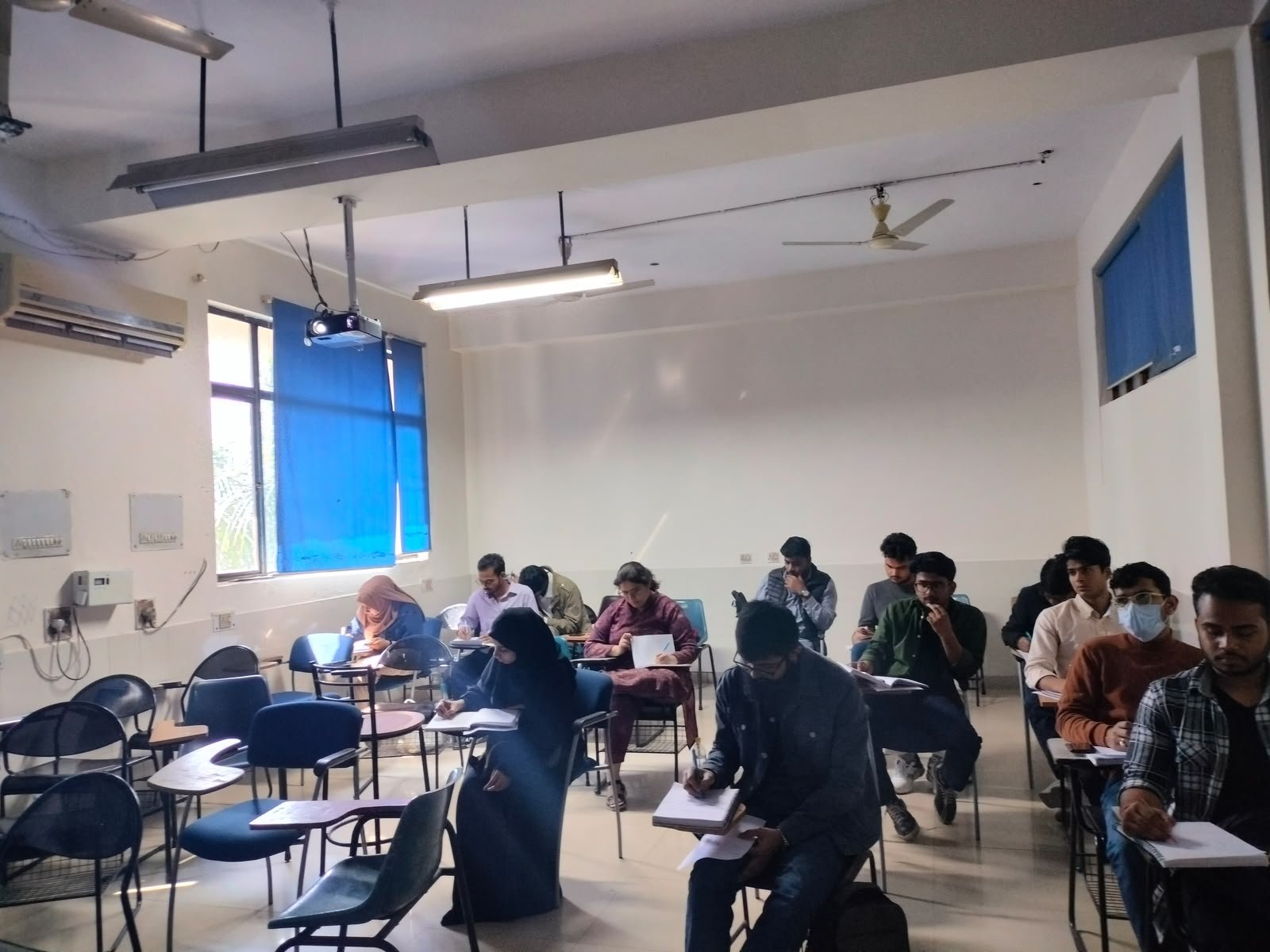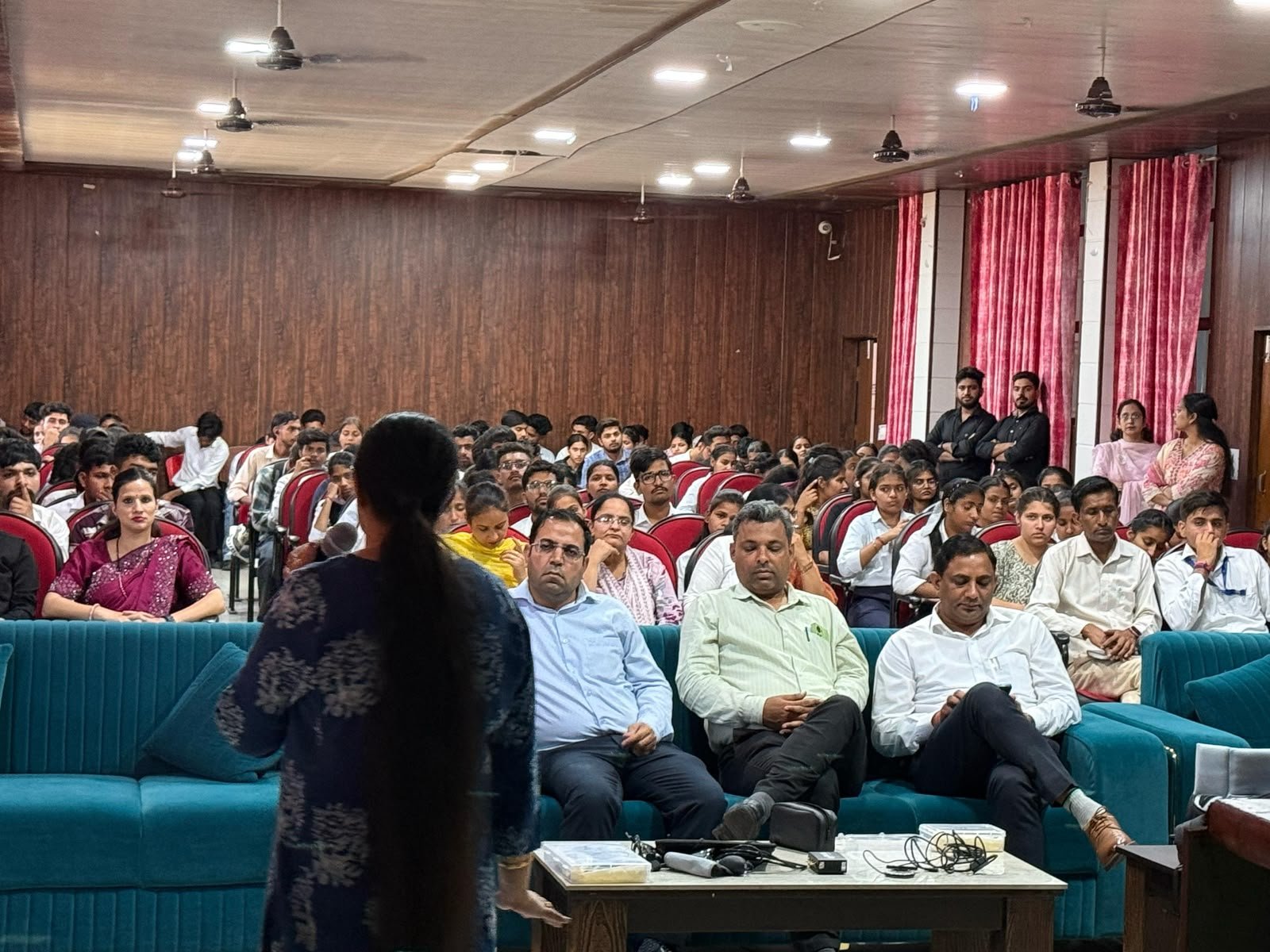
In today’s global business environment, organizations are expected to maintain workplaces that are safe, inclusive, respectful, and legally compliant. Preventing sexual harassment is not merely a legal obligation it is a fundamental aspect of corporate governance, employee well-being, and organizational reputation.
Legal Basta Law Firm offers comprehensive POSH Training Services for organizations across India and internationally. Our specialized training programs help organizations comply with the Prevention of Sexual Harassment (POSH) Act, 2013 while fostering a culture of dignity, respect, equality, and accountability.
Our team of experienced legal professionals, POSH consultants, compliance experts, and workplace ethics specialists delivers customized POSH training solutions designed specifically for corporate organizations, multinational corporations (MNCs), startups, government bodies, educational institutions, NGOs, healthcare organizations, manufacturing industries, and international enterprises.
Any unsolicited physical interaction of a sexual nature that makes an individual feel uncomfortable, intimidated, or unsafe may constitute sexual harassment under the POSH Act.
Common examples include:
Unwanted touching or physical contact
Hugging without consent
Attempting to kiss or embrace a colleague
Holding hands or placing hands on another person’s shoulder without permission
Brushing against someone’s body intentionally
Blocking a person’s movement
Physical intimidation or assault
Repeated attempts to establish unwanted physical intimacy
Organizations should educate employees on professional boundaries and ensure that all physical interactions in the workplace are respectful and consensual.
Any unsolicited physical interaction of a sexual nature that makes an individual feel uncomfortable, intimidated, or unsafe may constitute sexual harassment under the POSH Act.
Common examples include:
Unwanted touching or physical contact
Hugging without consent
Attempting to kiss or embrace a colleague
Holding hands or placing hands on another person’s shoulder without permission
Brushing against someone’s body intentionally
Blocking a person’s movement
Physical intimidation or assault
Repeated attempts to establish unwanted physical intimacy
Organizations should educate employees on professional boundaries and ensure that all physical interactions in the workplace are respectful and consensual.
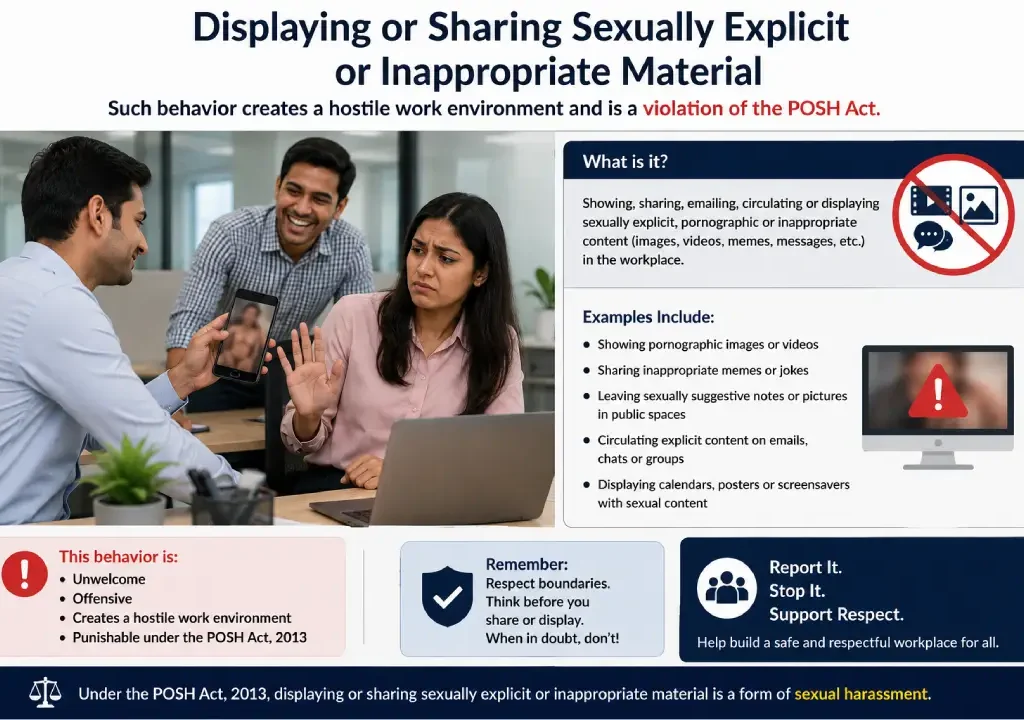
Displaying, accessing, or distributing offensive or sexually explicit content within the workplace can create a hostile work environment and may amount to workplace sexual harassment.
Examples include:
Sharing obscene photographs or videos
Forwarding sexually explicit emails or messages
Displaying inappropriate posters, calendars, or screensavers
Accessing adult websites on office systems
Circulating offensive memes or GIFs through workplace communication platforms
Sharing explicit content on corporate messaging applications
Organizations should implement strong IT usage policies and conduct regular awareness programmes to prevent digital misconduct.
Verbal misconduct involving comments, jokes, or conversations of a sexual nature can significantly affect an employee’s dignity and workplace experience.
Examples include:
Sexually suggestive jokes
Offensive comments regarding appearance or clothing
Repeated requests for dates despite refusal
Lewd remarks
Double-meaning conversations
Inappropriate compliments
Comments on marital status or personal relationships
Offensive discussions relating to gender or sexuality
Repeated verbal misconduct can contribute to a hostile workplace and may lead to disciplinary action.
Sexual harassment may also occur through gestures, expressions, or body language without verbal communication.
Common examples include:
Leering or prolonged staring
Suggestive facial expressions
Winking with sexual intent
Inappropriate hand gestures
Intentional brushing against another person
Standing excessively close to someone
Displaying obscene gestures
Following an employee in a manner that causes discomfort
Although non-verbal, these behaviours can create an intimidating or humiliating work environment and are actionable under the POSH Act.
With the widespread adoption of remote and hybrid work models, digital platforms have become an extension of the workplace. Online misconduct is therefore covered under organizational POSH policies.
Examples include:
Sending inappropriate WhatsApp messages
Sexually explicit emails
Unwanted video calls
Sharing offensive content on social media
Cyberstalking
Repeated personal messages after refusal
Sending inappropriate emojis, memes, or GIFs
Posting offensive comments on professional networking platforms
Employers should establish clear digital communication policies and ensure that employees understand acceptable online workplace behaviour.
A workplace free from harassment promotes employee confidence, productivity, innovation, and retention. Organizations that invest in effective POSH training demonstrate their commitment to ethical leadership and employee welfare.
POSH training helps organisations:
Employees learn about:
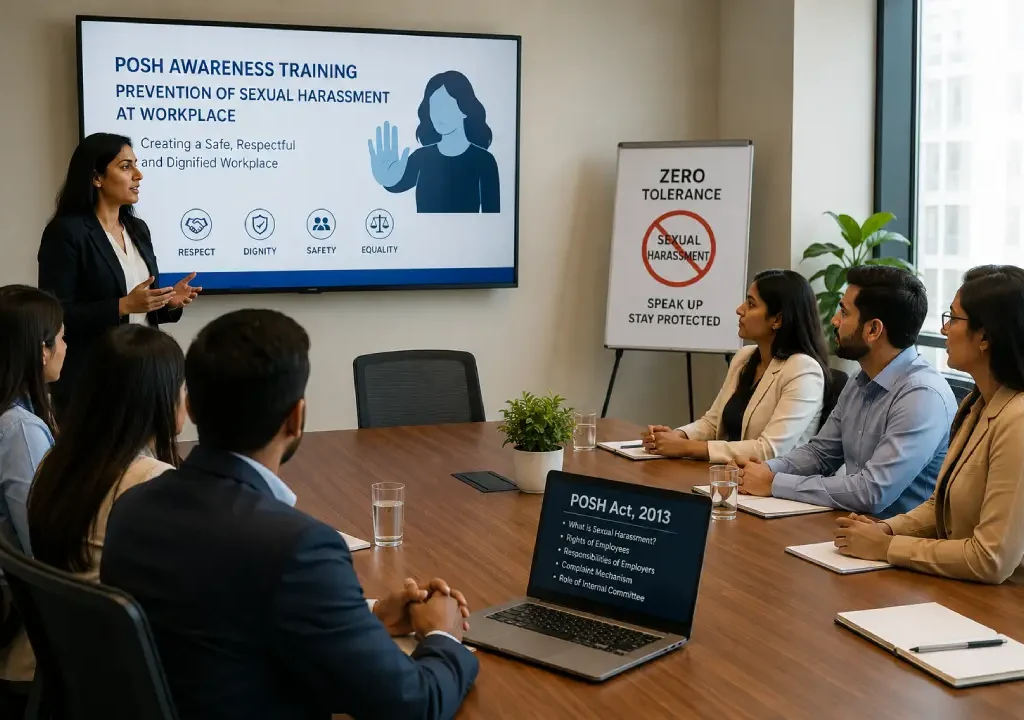
Participants understand:
• Employee rights under the POSH Act
• Employer obligations
• Reporting mechanisms
• Witness responsibilities
• Confidentiality requirements
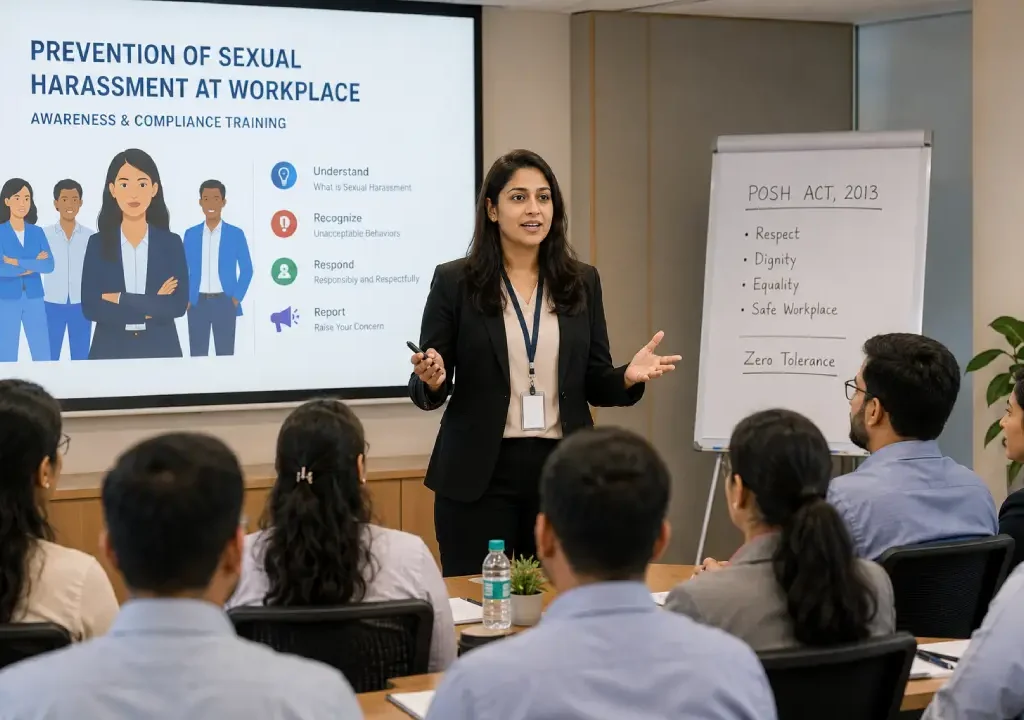
Training includes:
• Respectful workplace behavior
• Professional communication
• Social media conduct
• Remote workplace etiquette
• Gender sensitivity
An effective Internal Committee is critical for POSH compliance.
Our specialized ICC training includes:
• Principles of natural justice
• Evidence evaluation
• Witness examination
• Interview techniques
• Report preparation
• Practical case studies
• Mock inquiry proceedings
• Decision-making exercises
• Legal risk management
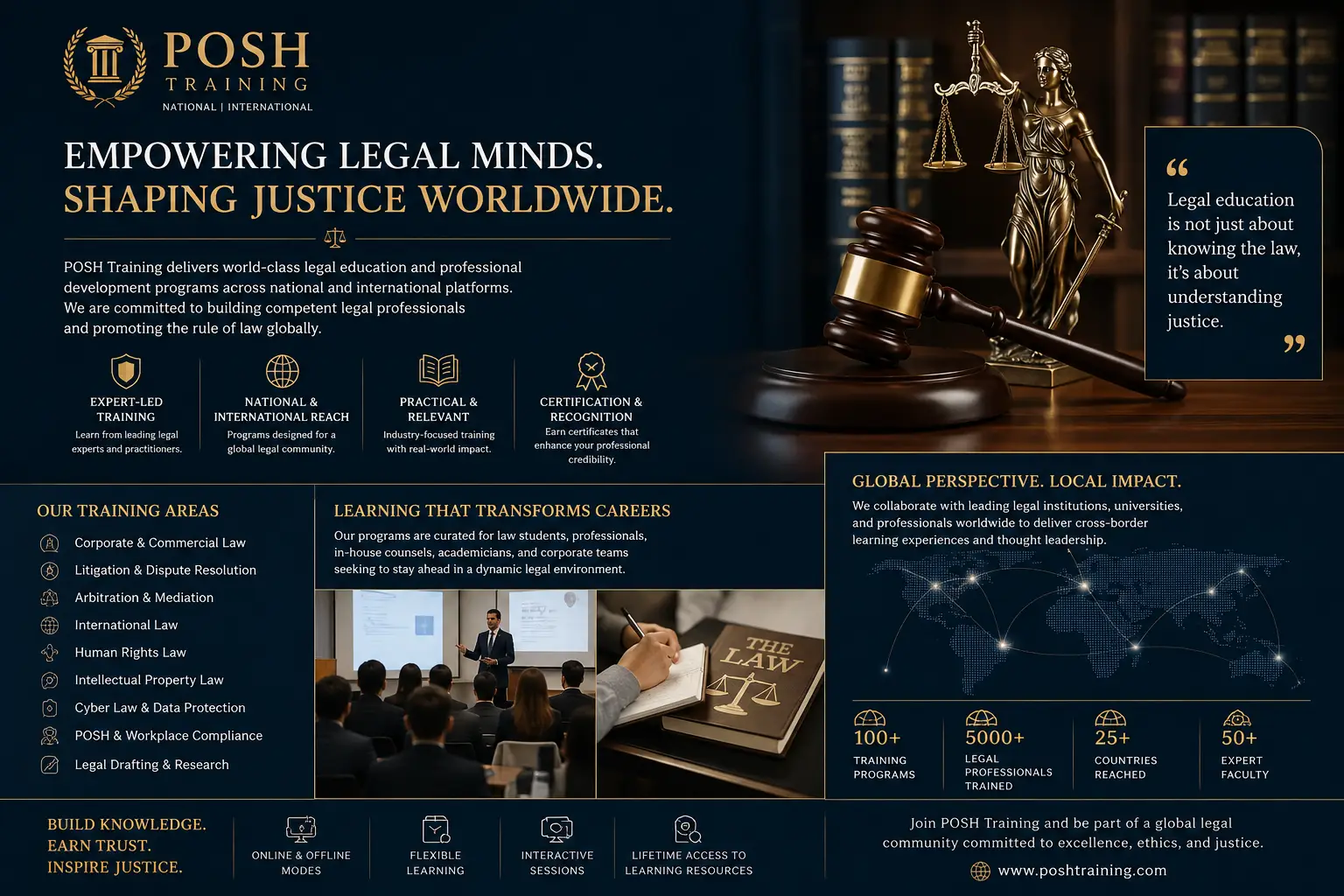
Legal Basta provides International POSH (Prevention of Sexual Harassment) Training Services to help organizations create safe, inclusive, and legally compliant workplaces across the globe. Our programs are designed in accordance with international laws, country-specific regulations, and global best practices, enabling businesses to meet their legal obligations while fostering a culture of respect, equality, and workplace dignity.
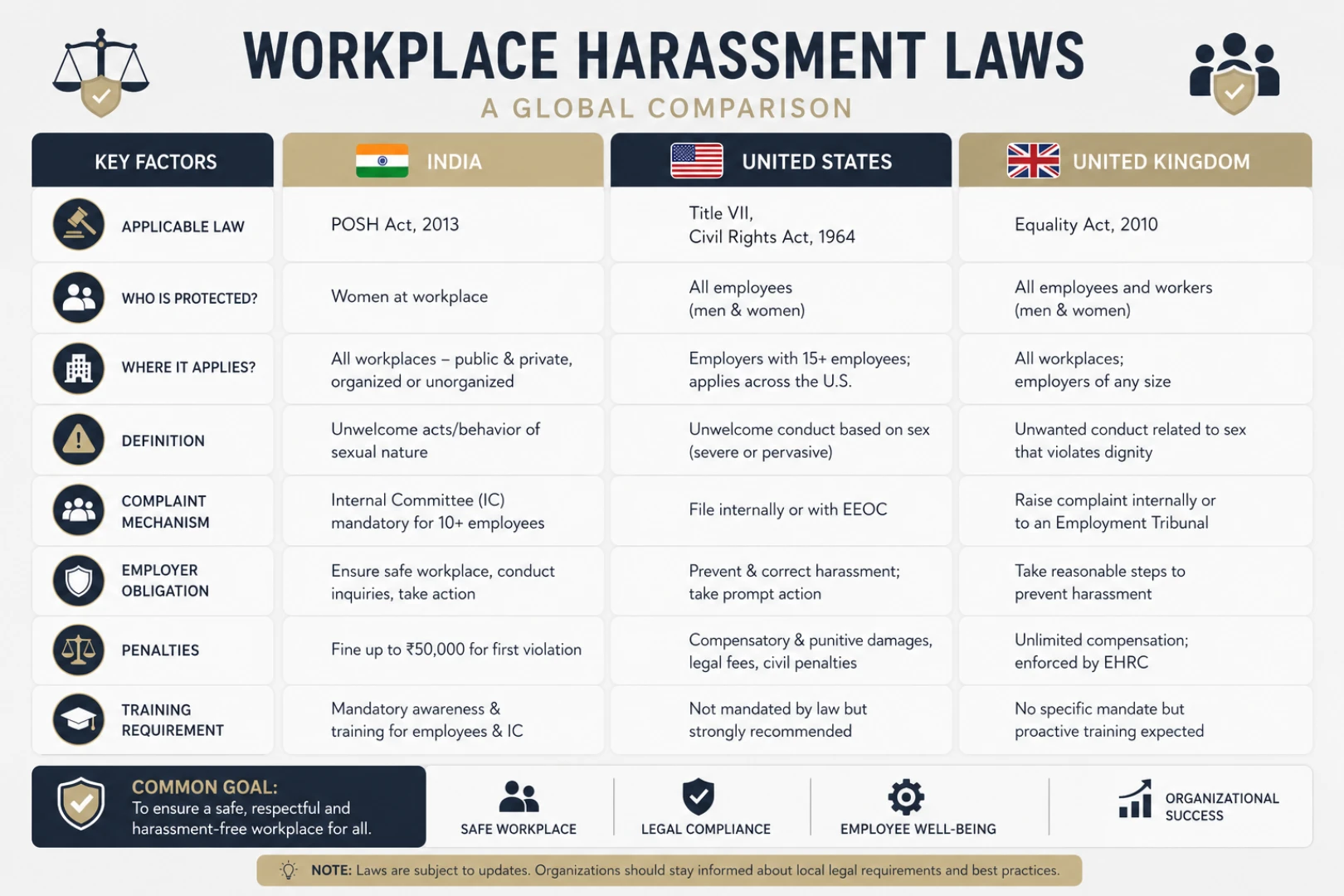
In the United Kingdom, our training aligns with the Equality Act 2010 and the October 2024 employer duty requiring organizations to take reasonable steps to prevent workplace sexual harassment. We also incorporate the latest ACAS and EHRC guidance. In the United States, our programs comply with Title VII of the Civil Rights Act, EEOC recommendations, and mandatory state training requirements in jurisdictions such as California, New York, and Illinois. Across the European Union, our content reflects Directive 2006/54/EC, ILO Convention C190, and relevant national equality laws to ensure comprehensive compliance.
Built on internationally recognized standards from the International Labour Organization (ILO) and the United Nations, our training includes the latest workplace research, practical case studies, reporting procedures, and prevention strategies to help organizations build a respectful work environment.
Our International POSH Training Programs cover global anti-harassment standards, cross-cultural workplace sensitivity, diversity, equity and inclusion (DEI), international employment practices, reporting mechanisms, complaint handling procedures, and global compliance frameworks. These customized programs are ideal for organizations operating in the United States, United Kingdom, Canada, Australia, Singapore, the UAE, Europe, Asia-Pacific, Africa, the Middle East, and other international markets.
By combining legal compliance, interactive learning, and practical workplace solutions, Legal Basta helps organizations reduce legal risks, strengthen employee awareness, and create harassment-free, respectful, and inclusive workplaces that meet global compliance standards.

Hybrid workplace compliance • Digital communication risks • Global workforce training


Doctor and staff sensitization • Patient interaction guidelines • Professional conduct standards

Faculty awareness • Student protection mechanisms • Campus compliance frameworks

Professional conduct compliance • Client interaction protocols • Regulatory risk management
Completing our training earns each participant a certificate of completion. In India, this serves as proof of “education and training” on POSH, a compliance requirement under the Act. For international clients, certificates note alignment with relevant standards (e.g. “Interactive course on UK Preventing Sexual Harassment in the Workplace, per Equality Act 2010”). We can also provide Continuing Education credits if needed (e.g. for HR professionals).
Beyond training, LegalBasta assists with ongoing compliance:
• Policy Development: We help draft or review your workplace anti-harassment policy. A comprehensive POSH policy will explicitly define “sexual harassment” as per the Act, outline ICC procedures, and list contact points (ICC, local complaints committee).
• Board Reporting: Public and private companies must report POSH compliance. For listed companies, the Companies (Accounts) Amendment Rules, 2018 (Rule 8) mandate a statement in the Director’s Report on POSH compliance. We guide firms on fulfilling this (e.g. including number of cases and compliance steps).
• Internal Audits: We can conduct POSH audits to identify compliance gaps, prepare the mandatory annual report (under Section 21 POSH Act and Rule 14 POSH Rules). This report must include number of complaints received/disposed/pending and workshops conducted, even if zero complaints. We provide templates and checklists (see next section) to ensure all statutory fields are covered.
Our service agreement (sample contract) specifies project scope (e.g. number of training sessions), deliverables, timelines, and confidentiality clauses. Notably, POSH law requires confidentiality of the inquiry process (breach is punishable), so our contracts ensure all materials (especially reports and minutes) are handled accordingly.
Yes. The POSH Act mandates that “every employer is required to organize workshops and awareness programs at regular intervals for the purpose of sensitizing employees to the provisions of the POSH Act”. In practice, annual refresher sessions are advised. All staff (including managers, contractors and support staff) should receive training.
Any workplace in India with 10 or more employees must form an ICC. The committee must have at least four members (including a woman chairperson) and one external member.
The Act protects “any aggrieved woman”, meaning only women (and transgender persons, by extension) can be complainants. (However, best practice is for all genders to receive training.) Complaints against individuals of any gender are permitted as long as the
In the UK, sexual harassment is illegal under the Equality Act 2010, and as of Oct 2024 employers have a duty to prevent it. The government strongly recommends training (and ACAS/EHRC provide guidance). In the US, federal law doesn’t mandate training, but many states (CA, NY, IL, etc.) do. Regardless, training is considered part of an employer’s duty of care and can strengthen legal defense.
We cover definitions of harassment (quid pro quo, hostile environment), legal rights, bystander intervention, reporting procedures, ICC roles, and prevention strategies. Modules include real-case scenarios and best-practice guidelines (e.g. ILO recommendations).
Yes. After each course, participants receive a certificate stating the course name and date. This can be used in audit records to prove compliance.
Along with training, LegalBasta supplies downloadable templates (policy, forms, reports, checklists) and updates clients on any legal changes. We also offer email/phone support for compliance queries during the contract period.
Contact us for a free consultation. We’ll assess your organization’s size, current compliance status, and training needs, and propose a tailored program and quotation.
POSH Training Services in Delhi Localities
POSH Training Services in Karol Bagh | POSH Training Services in Laxmi Nagar | POSH Training Services in Rohini | POSH Training Services in Dwarka | POSH Training Services in Connaught Place | POSH Training Services in Chandni Chowk | POSH Training Services in Uttam Nagar | POSH Training Services in Chawri Bazar | POSH Training Services in Janakpuri | POSH Training Services in Pitampura | POSH Training Services in Rajouri Garden | POSH Training Services in Nehru Place | POSH Training Services in Lajpat Nagar | POSH Training Services in New Delhi | POSH Training Services in Shahdara
POSH Training Services in Popular Cities Across India
POSH Training Services in Andhra Pradesh | POSH Training Services in Amaravati | POSH Training Services in Visakhapatnam | POSH Training Services in Vijayawada | POSH Training Services in Tirupati | POSH Training Services in Arunachal Pradesh | POSH Training Services in Itanagar | POSH Training Services in Naharlagun | POSH Training Services in Assam | POSH Training Services in Dispur | POSH Training Services in Guwahati | POSH Training Services in Jorhat | POSH Training Services in Dibrugarh | POSH Training Services in Bihar | POSH Training Services in Patna | POSH Training Services in Gaya | POSH Training Services in Muzaffarpur | POSH Training Services in Bhagalpur | POSH Training Services in Chhattisgarh | POSH Training Services in Raipur | POSH Training Services in Bilaspur | POSH Training Services in Durg | POSH Training Services in Goa | POSH Training Services in Panaji | POSH Training Services in Margao | POSH Training Services in Vasco da Gama | POSH Training Services in Gujarat | POSH Training Services in Gandhinagar | POSH Training Services in Ahmedabad | POSH Training Services in Surat | POSH Training Services in Rajkot | POSH Training Services in Haryana | POSH Training Services in Chandigarh | POSH Training Services in Faridabad | POSH Training Services in Hisar | POSH Training Services in Panipat | POSH Training Services in Himachal Pradesh | POSH Training Services in Shimla | POSH Training Services in Dharamshala | POSH Training Services in Mandi | POSH Training Services in Kullu | POSH Training Services in Jharkhand | POSH Training Services in Ranchi | POSH Training Services in Jamshedpur | POSH Training Services in Dhanbad | POSH Training Services in Karnataka | POSH Training Services in Bengaluru | POSH Training Services in Mysuru | POSH Training Services in Hubballi | POSH Training Services in Mangaluru | POSH Training Services in Kerala | POSH Training Services in Thiruvananthapuram | POSH Training Services in Kochi | POSH Training Services in Kozhikode | POSH Training Services in Thrissur | POSH Training Services in Madhya Pradesh | POSH Training Services in Bhopal | POSH Training Services in Indore | POSH Training Services in Jabalpur | POSH Training Services in Gwalior | POSH Training Services in Maharashtra | POSH Training Services in Mumbai | POSH Training Services in Pune | POSH Training Services in Nagpur | POSH Training Services in Nashik | POSH Training Services in Manipur | POSH Training Services in Imphal | POSH Training Services in Kakching | POSH Training Services in Meghalaya | POSH Training Services in Shillong | POSH Training Services in Cherrapunji | POSH Training Services in Mizoram | POSH Training Services in Aizawl | POSH Training Services in Lunglei | POSH Training Services in Saiha | POSH Training Services in Nagaland | POSH Training Services in Kohima | POSH Training Services in Dimapur | POSH Training Services in Mokokchung | POSH Training Services in Odisha | POSH Training Services in Bhubaneswar | POSH Training Services in Cuttack | POSH Training Services in Puri | POSH Training Services in Punjab | POSH Training Services in Ludhiana | POSH Training Services in Jalandhar | POSH Training Services in Amritsar | POSH Training Services in Rajasthan | POSH Training Services in Jaipur | POSH Training Services in Jodhpur | POSH Training Services in Udaipur | POSH Training Services in Kota | POSH Training Services in Sikkim | POSH Training Services in Gangtok | POSH Training Services in Geyzing | POSH Training Services in Tamil Nadu | POSH Training Services in Chennai | POSH Training Services in Coimbatore | POSH Training Services in Madurai | POSH Training Services in Tiruchirappalli | POSH Training Services in Telangana | POSH Training Services in Hyderabad | POSH Training Services in Warangal | POSH Training Services in Nizamabad | POSH Training Services in Khammam | POSH Training Services in Tripura | POSH Training Services in Agartala | POSH Training Services in Kailasahar | POSH Training Services in Udaipur (Tripura) | POSH Training Services in Uttar Pradesh | POSH Training Services in Lucknow | POSH Training Services in Kanpur | POSH Training Services in Ghaziabad | POSH Training Services in Varanasi | POSH Training Services in Uttarakhand | POSH Training Services in Dehradun | POSH Training Services in Haridwar | POSH Training Services in Rudraprayag | POSH Training Services in West Bengal | POSH Training Services in Kolkata | POSH Training Services in Howrah | POSH Training Services in Haldia | POSH Training Services in Ladakh | POSH Training Services in Leh | POSH Training Services in Jammu | POSH Training Services in Kashmir | POSH Training Services in Srinagar | POSH Training Services in Puducherry | POSH Training Services in Lakshadweep | POSH Training Services in Kavaratti | POSH Training Services in Andaman and Nicobar Islands | POSH Training Services in Port Blair | POSH Training Services in Dadra and Nagar Haveli | POSH Training Services in Daman | POSH Training Services in Diu | POSH Training Services in Chandigarh | POSH Training Services in Delhi
The rules of the Bar Council of India prohibit law firms from soliciting work or advertising in any manner. By clicking on ‘I AGREE’, the user acknowledges that:
The user wishes to gain more information about Legal Basta, its practice areas and its attorneys, for his/her own information and use;
The information is made available/provided to the user only on his/her specific request and any information obtained or material downloaded from this website is completely at the user’s volition and any transmission, receipt or use of this site is not intended to, and will not, create any lawyer-client relationship; and
None of the information contained on the website is in the nature of a legal opinion or otherwise amounts to any legal advice.
Legal Basta is not liable for any consequence of any action taken by the user relying on material/information provided under this website. In cases where the user has any legal issues, he/she in all cases must seek independent legal advice.