
Rape laws in India : victim rights & legal protection guide
Rape is a grave criminal offence under rape laws in India, addressed primarily under Section 375 and Section 376 of the IPC, along with other provisions of sexual assault laws in India. It represents a serious violation of an individual’s dignity, bodily autonomy, and fundamental rights. The legal framework in India provides strict punishment for rape and aims to ensure justice for survivors through well-defined procedures and victim protection mechanisms. Understanding the rights of rape victims in India, the legal remedies available, and the process of seeking justice is essential for awareness and empowerment. Despite strong laws, challenges remain in reporting and prosecution, making it crucial to promote awareness, legal support, and societal responsibility. Strengthening women safety laws in India and ensuring access to timely legal help for sexual assault victims are key steps toward building a safer and more just society.
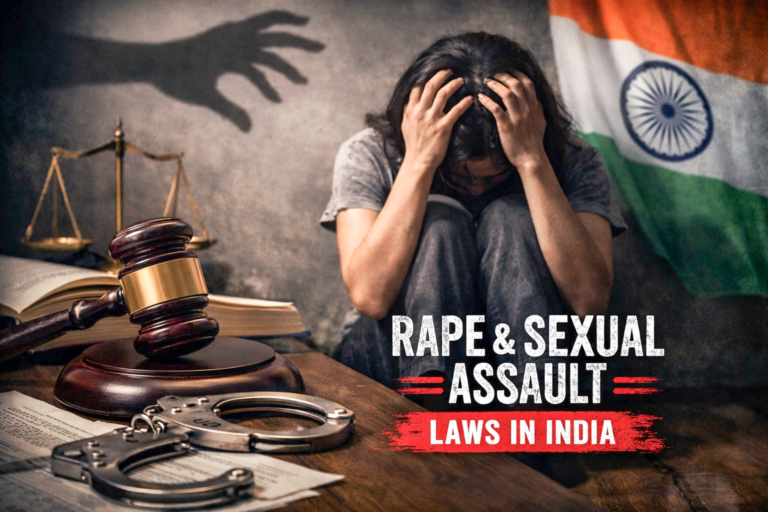
Rape Laws in India: Legal Framework and Victim Rights
Rape is one of the most serious offences under rape laws in India, governed primarily by Section 375 IPC, which defines the offence, and Section 376 IPC, which prescribes strict punishment for rape. These provisions, along with other sexual assault laws in India, aim to protect individuals from violations of bodily autonomy and dignity while ensuring justice for survivors.
The Indian legal system has strengthened its framework through amendments such as the Criminal Law (Amendment) Act, introducing stricter penalties and expanding the definition of sexual offences. Understanding the rights of rape victims in India is crucial, as survivors are entitled to medical assistance, legal aid, privacy protection, and the right to file complaints without delay.
Victims can seek legal help for sexual assault by approaching the police, filing an FIR, or using online cyber crime portals. Strengthening women safety laws in India and ensuring timely justice remain essential to addressing such crimes and building a safer society.
Rape Laws in India: Statistics, Challenges, and the Way Forward
Over the past few decades, India has witnessed a concerning rise in reported rape cases, highlighting the urgent need for stronger awareness and enforcement of rape laws in India. According to data from the National Crime Records Bureau, more than 30,000 rape cases have been reported annually over the last decade, averaging nearly 85 cases per day. States such as Rajasthan, Madhya Pradesh, Maharashtra, Uttar Pradesh, Kerala, and the capital city Delhi have consistently reported high numbers. Rajasthan recorded the highest cases in both 2019 and 2020, while Madhya Pradesh led in 2018.
These alarming statistics underscore the critical importance of strengthening rape laws in India, ensuring strict implementation, faster justice delivery, and enhanced protection for victims to create a safer society.
Understanding Rape Laws in India and Their Legal Framework
Rape is recognized as one of the most serious and prevalent crimes in India, making the understanding of rape laws in India critically important. Legally, rape is defined under Section 375 of the Indian Penal Code, which goes beyond traditional assumptions. It includes not only vaginal penetration but also any form of non-consensual penetration involving the mouth, anus, or urethra. This broader definition reflects a more comprehensive approach toward protecting women from sexual violence.
Historically, interpretations of rape laws have often reflected a male-dominated societal structure, where men are typically viewed as perpetrators and women as victims. However, modern legal reforms and judicial interpretations aim to strengthen women’s rights, ensure stricter punishments, and provide better support mechanisms for survivors.
An in-depth understanding of the provisions under rape laws in India, along with awareness of legal rights and remedies, is essential to promote justice, accountability, and a safer society.
Rape Laws in India: Section 375 IPC, Key Provisions and Legal Reforms
The framework of rape laws in India is primarily governed by Section 375 of the Indian Penal Code, which clearly defines rape and the circumstances under which it is committed. The law recognizes various situations such as acts against a woman’s will, without her consent, or consent obtained through fear, deception, intoxication, or unsoundness of mind. It also criminalizes sexual acts involving minors, irrespective of consent. Importantly, the legal definition has evolved to include all forms of non-consensual penetration—whether vaginal, oral, or anal—as well as the use of objects or manipulation of body parts, thereby broadening the scope of protection under rape laws in India.
Punishment for rape is prescribed under Section 376 of the IPC, which mandates rigorous imprisonment of not less than seven years, extending to life imprisonment, along with fines. Significant changes in these punishments were introduced after the landmark Nirbhaya case, which led to nationwide outrage and legal reform. Following this incident, the Justice Verma Committee was constituted, which recommended crucial amendments including expanding the definition of rape, increasing penalties, abolishing the controversial two-finger test, and improving police accountability.
As a result, the Criminal Law (Amendment) Act, 2013 was enacted, introducing stricter provisions related to sexual offences, mandating police to register FIRs, enabling e-filing of complaints, and ensuring victim-friendly procedures. It also emphasized better policing practices, including CCTV installation in police stations and greater responsibility of officers to assist victims regardless of jurisdiction.
Despite these progressive reforms in rape laws in India, challenges remain in effective implementation. While the legal structure has become more comprehensive over time, the focus now must shift toward strict enforcement, faster justice delivery, and increased awareness. Strengthening institutional accountability and societal change are essential to ensure that the true spirit of rape laws in India is realized in practice.
Rape Laws in India: Legal Provisions and Safeguards
The legal framework surrounding rape laws in India has evolved significantly to address the gravity of sexual offences and ensure justice for survivors. The offence of rape is primarily governed under Sections 375 and 376 of the Indian Penal Code, which define the act and prescribe stringent punishments, including rigorous imprisonment and fines depending on the severity of the crime.
In addition to the penal provisions, several procedural safeguards have been introduced to protect the dignity and rights of victims. The Criminal Law (Amendment) Act, 2013 expanded the definition of rape, introduced stricter punishments, and recognized various forms of sexual assault. It also emphasized speedy investigation and trial of such offences. Further, laws ensure that the identity of the victim is protected, and statements can be recorded by female officers to create a more sensitive legal environment.
The Supreme Court of India has also played a crucial role by issuing guidelines to ensure fair investigation, victim compensation, and timely justice delivery. Special fast-track courts have been established in many parts of the country to handle cases related to sexual offences efficiently.
Conclusion
In conclusion, while rape laws in India have become more comprehensive and stringent over time, effective implementation remains the key to ensuring justice. Strengthening awareness, improving legal processes, and promoting gender equality are essential steps toward reducing such crimes. A robust legal framework, combined with societal change, can help build a safer and more just environment for all.